Why Insider Trading Data Matters
When a CEO spends $2 million of their own money buying shares in the company they run, that means something. They already have most of their net worth tied up in the company through salary, bonuses, and stock options. The decision to go to the open market and buy additional shares — knowing that every transaction will be publicly disclosed — is a deliberate signal of conviction. They know the business better than any analyst. They see the pipeline, the margins, the deals in progress. And they are putting their own capital on the line.
This is what makes insider trading data one of the most underused edges in stock research. I am not talking about illegal insider trading — the kind that lands people in front of a judge. I am talking about the perfectly legal, publicly disclosed kind. The SEC requires corporate insiders — officers, directors, and anyone holding more than 10% of a company's shares — to file a Form 4 within two business days of any transaction. These filings go directly to EDGAR, the SEC's public database, where anyone can access them.
The academic research on this is substantial. Studies going back decades have found that stocks with significant insider purchasing activity tend to outperform over the following 6 to 12 months. The signal is not perfect — a single insider buying a small amount might mean nothing — but when you see clusters of multiple insiders buying at the same company within a short window, the historical data gets much more interesting. A study by Lakonishok and Lee found that aggregate insider buying is a reliable predictor of future stock returns, and subsequent research has consistently reinforced that finding.
The problem is that raw EDGAR data is painful to use. Form 4 filings are XML documents with inconsistent formatting, and you have to cross-reference CIK numbers with tickers, parse transaction codes, and manually identify patterns across thousands of filings per day. That is where insider trading tracker tools come in. They aggregate, filter, and analyze the filings so you can actually spot the signals without writing your own EDGAR parser.
I have been tracking insider buying as part of my own trading research for years, and I built insider tracking directly into the #1 platform below because I could not find a tool that did everything I wanted — particularly cluster detection and insider performance scoring. Here is what I found after testing the options available in 2026.
What Makes a Good Insider Trading Tracker
Not all insider trading trackers are created equal. After using these tools for years, I have a clear picture of what separates a genuinely useful corporate insider buying tracker from one that just dumps raw filing data on a page. Here is what matters:
- Data freshness. How fast does the platform process new SEC Form 4 filings after they hit EDGAR? For insider buying signals, same-day updates are the minimum. You do not need millisecond latency — this is not an intraday signal — but finding out about a cluster of insider purchases three days late defeats the purpose.
- Filtering depth. Can you filter by insider role (CEO vs. Director vs. 10% Owner), transaction type (open market purchase vs. option exercise), transaction size, and date range? The difference between a CEO buying $5 million in stock and a director exercising stock options they received as compensation is enormous. A good insider buying screener lets you isolate the transactions that actually matter.
- Cluster detection. This is the feature that separates basic trackers from useful ones. A single insider buying means little in isolation. But when the CEO, CFO, and two directors all buy shares within the same week, that is a signal worth paying attention to. An insider cluster detection tool automatically identifies these patterns so you do not have to manually cross-reference filing dates.
- Performance tracking. Did past insider buys at this company actually work? A good tracker should show you each insider's historical purchase record and how those purchases performed over time — win rate, average return, holding period. This turns raw filing data into actionable intelligence.
- Chart integration. Insider data is most useful when you can see it in the context of the stock's price action. Knowing that three insiders bought last Tuesday is more meaningful when you can see where that falls on a chart — was it near a 52-week low? After an earnings dip? At a key support level?
- Alerting. Can the platform notify you when insider buying activity matches your criteria? Insider trading alerts save you from having to manually check the tracker every day.
With those criteria in mind, here is how the seven platforms stack up.
Quick Comparison Table
| Platform | Price | Real-Time Data | Cluster Detection | Role Filtering | Performance Scoring | Integrated Charts |
|---|---|---|---|---|---|---|
| ChartingLens | Free / $9.99/mo | Yes | Yes | Yes | Yes | Yes |
| OpenInsider | Free | Yes | No | Basic | No | No |
| Quiver Quantitative | Free tier | Same-day | No | Basic | No | No |
| Finviz | Free / $39.50/mo | Delayed | No | No | No | Basic |
| WhaleWisdom | Free / $49.99/mo | 13F focused | No | No | No | No |
| InsiderMonkey | Free | No | No | No | No | No |
| SEC EDGAR | Free | Yes | No | No | No | No |
The 7 Platforms I Tested
1. ChartingLens — Best Overall Insider Trading Tracker
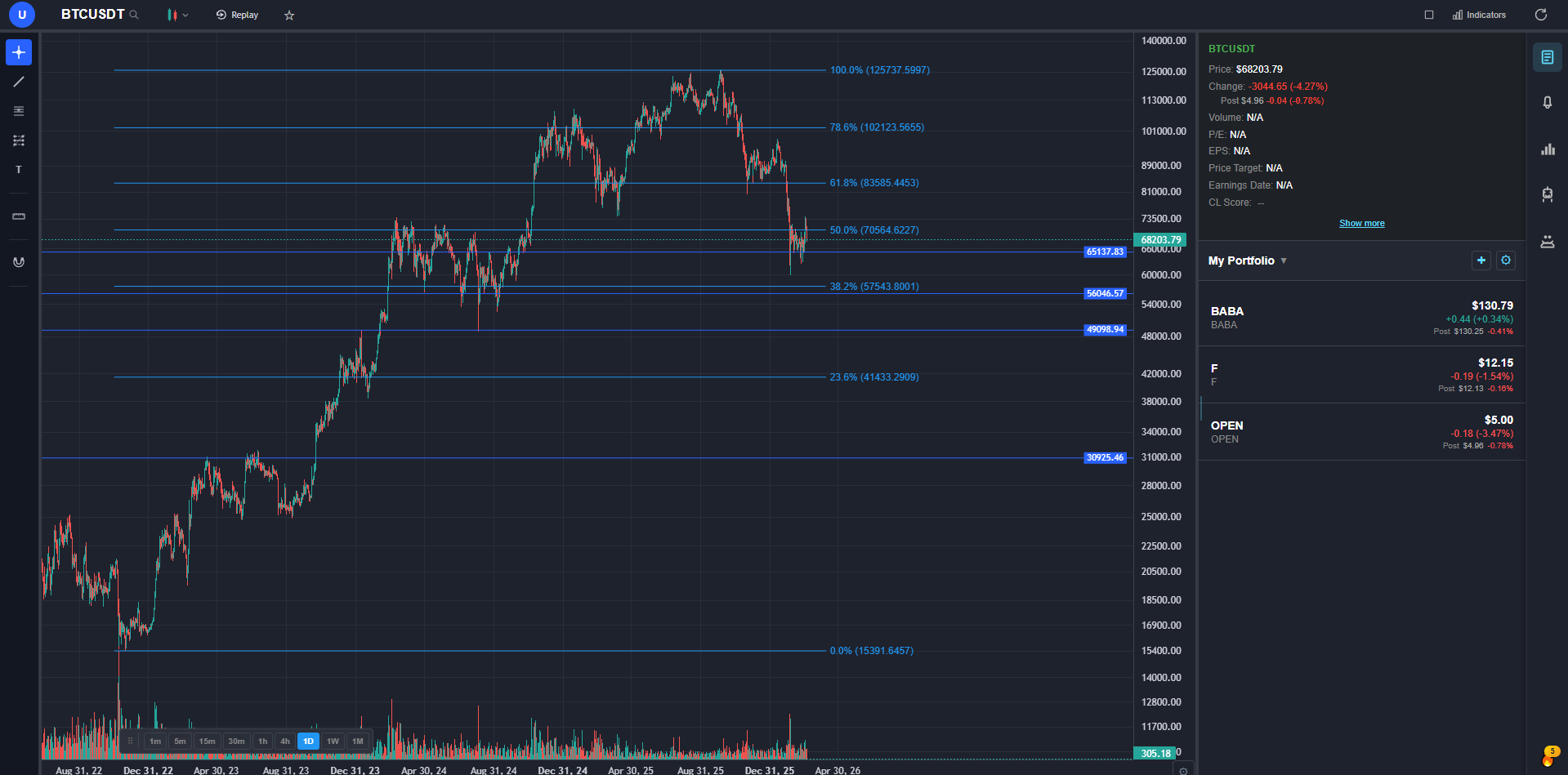
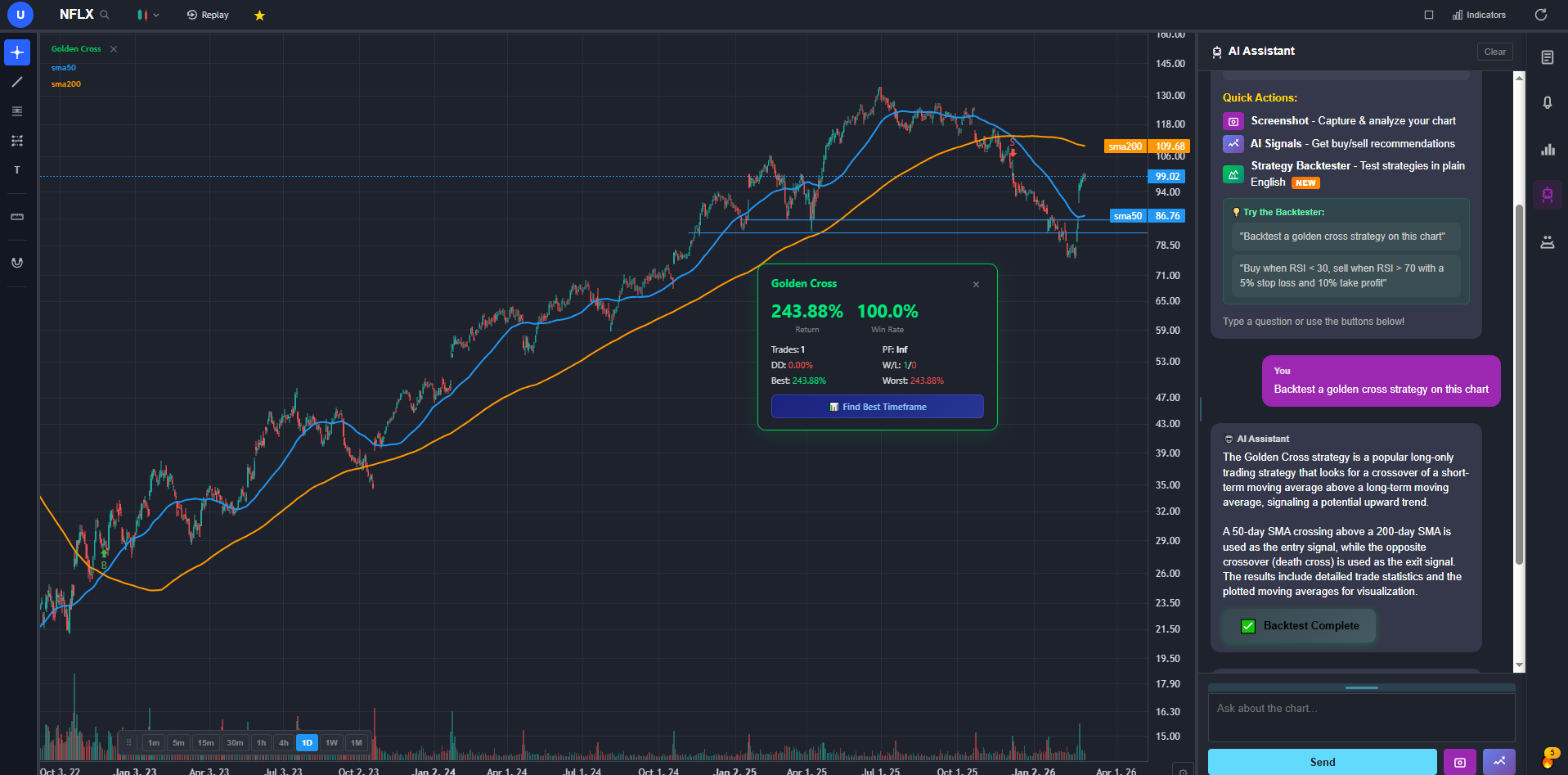
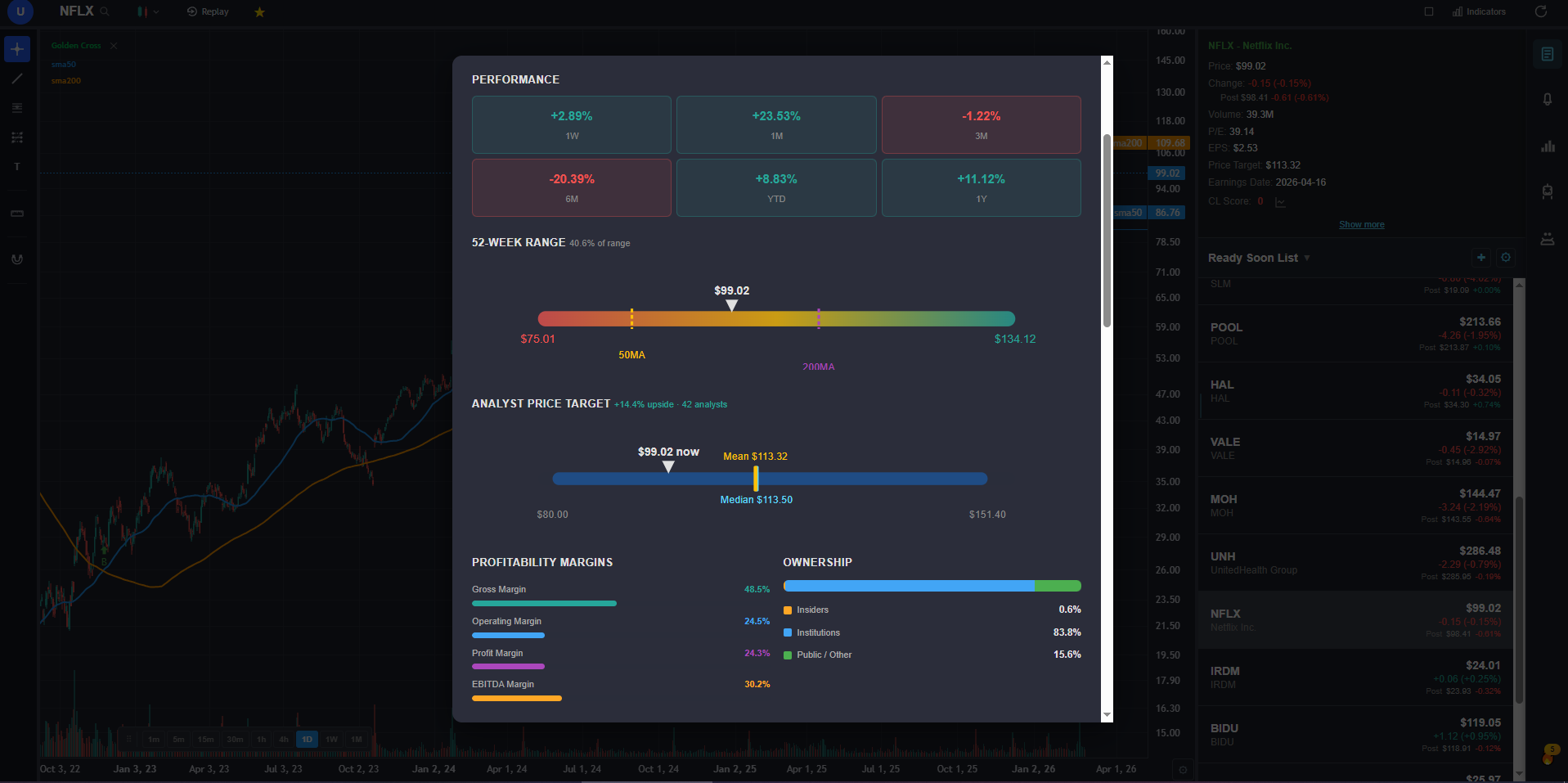
I built ChartingLens because the insider tracking tools I was using all had the same problem: they showed me the data but did not help me make sense of it. I could see that an insider bought shares. Great. But was it meaningful? Was it part of a cluster? Did this insider have a good track record? How did the stock perform after their previous purchases? None of the existing tools answered those questions without significant manual work.
ChartingLens pulls real-time SEC Form 4 data and lets you filter by everything that matters: buy vs. sell, insider role (CEO, CFO, Director, VP, 10% Owner), transaction size, and date range. You can isolate open market purchases from option exercises, which is critical — an executive exercising options they were granted as compensation carries very different informational value than one going to the market and buying shares with their own money.
The feature I am most proud of is cluster detection. When 3 or more insiders at the same company buy within a short period, ChartingLens flags it automatically and assigns a cluster score based on three factors: the number of insiders involved, the total dollar amount, and the seniority level of the buyers. A cluster where the CEO, CFO, and COO all buy $500K+ each scores significantly higher than one where three directors each pick up $20K in shares. The scoring reflects the reality that not all insider buying carries the same weight.
ChartingLens also tracks insider performance history. For each insider, you can see their past purchases, the return on each one, and their overall win rate. Some insiders are consistently good at timing their own stock. Others buy routinely regardless of price. Being able to distinguish between the two turns a noisy signal into a much cleaner one. The P&L tracking shows how each purchase has performed since the filing date, so you can quickly see whether a cluster from two months ago has played out.
Everything is integrated directly into the charting platform. You can see insider purchases overlaid on the price chart, view company fundamentals alongside the insider data, and use the AI assistant to analyze patterns. The free tier includes basic insider data. Premium at $9.99/mo unlocks full cluster detection, performance scoring, and insider trading alerts.
2. OpenInsider — Best Free Insider Data Lookup
OpenInsider is the go-to free insider trading tracker and has been for years. The interface is minimal — essentially a filterable table of recent SEC Form 4 filings. You can filter by date, ticker, insider name, transaction type, and filing date. The data updates quickly, typically within hours of filings hitting EDGAR. For a free tool, the data freshness is solid.
The site organizes filings into useful preset views: latest cluster buys (though this is a simple date-proximity grouping, not a scored system), largest purchases, CEO/CFO buys, and penny stock insider activity. The table shows transaction details including shares traded, price, value, and the insider's remaining ownership — which is useful for gauging whether a purchase is meaningful relative to their existing stake.
The limitations are clear: there is no cluster scoring, no insider performance tracking, no P&L analysis, and no charts. You are looking at a table of filings and doing the pattern recognition yourself. There are no alerts — you have to manually check the site. For quick, free lookups of recent insider purchases, OpenInsider is the best option. But if you want to track insider stock purchases systematically with cluster detection and performance data, you need something more complete.
3. Quiver Quantitative — Best Alternative Data Breadth
Quiver Quantitative takes an interesting approach by combining insider trading data with other alternative data sources: congressional stock trades, government contracts, lobbying expenditures, patent filings, and corporate flight tracking. If you are the kind of trader who looks at insider buying alongside political trading patterns and government spending signals, Quiver puts it all in one place.
The insider trading section shows recent Form 4 filings with basic filtering. The data is presented cleanly, and you can view it per-stock or across the market. The congressional trading data is particularly interesting — seeing which members of Congress are buying the same stocks as corporate insiders adds another layer of signal. The platform has a free tier that covers most of the data, which is generous.
The limitation is that insider tracking is one of many features, not the focus. There is no insider cluster detection, no performance scoring, no role-specific filtering beyond the basics, and no chart integration. Quiver is best thought of as an alternative data dashboard that happens to include insider data, rather than a dedicated insider buying screener. For traders who want insider data alongside congressional trading and other alternative signals, Quiver is a unique complement.
4. Finviz — Best for Checking Insider Data on Stocks You Already Follow
Finviz is an excellent stock screener, but its insider trading data is supplementary rather than a core feature. Each stock page includes an "Insider Trading" tab that shows recent Form 4 transactions for that specific company. The data is useful if you are already looking at a stock and want to check whether insiders have been buying or selling — it adds context to your existing research.
What Finviz does not offer is a dedicated insider buying screener. You cannot scan across the entire market to find stocks with recent insider buying activity. You cannot filter by transaction size, insider role, or identify clusters. There are no insider trading alerts. The insider data is a look-up tool, not a discovery tool. Elite at $39.50/month adds real-time data and advanced screening, but the insider data feature set remains the same.
If Finviz is already part of your workflow and you occasionally want to check insider activity for a specific stock, the built-in tab works fine. But if you are specifically looking for an insider trading tracker — a tool to scan the market for insider buying signals, detect clusters, and track insider performance — Finviz is not built for that. You would pair it with a dedicated insider tracker like OpenInsider for basic lookup.
5. WhaleWisdom — Best for Institutional 13F Filings (Not Form 4)
WhaleWisdom is often mentioned in conversations about insider tracking, but it is important to understand what it actually does: it tracks 13F institutional filings, not Form 4 insider transactions. These are different things. 13F filings show what hedge funds and institutional investors are holding — what Buffett, Burry, Ackman, and other large fund managers own. Form 4 filings show what corporate insiders are buying and selling at their own companies.
For tracking superinvestor portfolio moves, WhaleWisdom is solid. The Pro plan at $49.99/month adds detailed position analysis, historical holdings, and the ability to track specific funds over time. But 13F filings are reported quarterly with a 45-day delay, so the data is inherently stale compared to Form 4 filings which are reported within two business days.
If your goal is to track insider stock purchases at the corporate level — CEOs, CFOs, and directors buying shares of their own company — WhaleWisdom is not the right tool. It is focused on a different data source entirely. For institutional filing research, it serves its purpose. For insider buying signals, you need a dedicated SEC Form 4 tracker like OpenInsider.
6. InsiderMonkey — Best for Casual Reading About Insider Activity
InsiderMonkey is primarily an editorial site that publishes articles about notable insider transactions, hedge fund activity, and stock analysis. The articles are well-written and provide context around significant insider purchases — explaining who bought, how much, and why it might be noteworthy. For staying informed about high-profile insider activity without doing your own research, the articles are useful.
However, InsiderMonkey is not a real-time tracking tool. You cannot filter Form 4 filings, set up insider trading alerts, screen for insider buying clusters, or analyze insider performance. The coverage is selective — they write about the transactions they find interesting, which means you will miss the vast majority of insider buying activity. There is no API, no data export, and no way to systematically scan for signals.
Think of InsiderMonkey as a financial news site that focuses on insider and institutional activity, not as a corporate insider buying tracker. It is free and the content is decent for passive consumption. But if you want to actively track insider buying across the market and make it part of your trading process, you need an actual data tool — such as OpenInsider for free basic lookups.
7. SEC EDGAR Direct — The Raw Source
EDGAR is where all Form 4 filings originate. Every insider trading tracker on this list ultimately sources its data from here. It is free, it is authoritative, and it is updated as soon as filings are submitted. If you want the rawest, fastest access to insider transaction data, EDGAR is the source of truth.
The problem is usability. Form 4 filings on EDGAR are XML documents. The full-text search works but is slow and imprecise. There is no filtering by insider role, transaction type, or dollar amount. There is no way to spot clusters unless you manually cross-reference filing dates across multiple companies. There is no performance tracking, no charting, no alerts, and no visualization. You are looking at raw regulatory filings.
EDGAR is best suited for developers who want to build their own insider trading tools on top of the raw data, or for traders who need to verify a specific filing that they found on another platform. For actual research workflow, you want a platform that has already done the parsing and analysis work.
Why Cluster Detection Changes Everything
If there is one takeaway from this entire review, it is this: a single insider buying shares is noise. Multiple insiders buying within the same window is signal.
Think about it from the inside. A CEO might buy shares for many reasons — they believe in the long-term vision, they want to show confidence after a rough quarter, their financial advisor recommended increasing their position, or they are simply executing a pre-planned purchase under a 10b5-1 plan. Any single purchase, taken in isolation, tells you very little about the near-term direction of the stock.
But when the CEO buys $1 million in shares, the CFO buys $500K, and two independent directors each buy $200K — all within the same two-week period — the calculus changes entirely. These are people with different roles, different risk tolerances, and different personal financial situations, all independently deciding to put their own money into the stock at the same time. The probability that all four of them are wrong about the company's prospects is much lower than the probability that one of them is wrong.
This is what insider buying cluster detection is designed to identify. Academic research supports the signal: a 2012 study by Jagolinzer, Larcker, and Taylor found that clustered insider purchases were significantly more predictive of future returns than individual transactions. The effect was strongest when the cluster included C-suite executives and when the dollar amounts were large relative to the insiders' compensation.
The way the #1 pick above handles cluster detection is straightforward. When three or more insiders at the same company file Form 4 purchase transactions within a defined window, the system flags it as a cluster and assigns a composite score based on:
- Number of insiders. Three insiders is the minimum threshold. Five or more is rare and scores much higher.
- Dollar amount. A cluster totaling $5 million carries more weight than one totaling $100K. The system scores the aggregate dollar amount and the average per-insider amount.
- Seniority level. CEO and CFO purchases score higher than director purchases, which score higher than VP-level purchases. 10% owners are scored separately since their motivations may differ from operational insiders.
The scored clusters surface in the insider dashboard alongside the raw filing data. You can sort by cluster score to see the strongest recent signals, or filter by sector, market cap, and date range. Each cluster links directly to the stock's chart so you can see the price context immediately.
No other platform I tested offers this. OpenInsider has a "cluster buys" view, but it is a simple date-proximity grouping with no scoring. Finviz, WhaleWisdom, InsiderMonkey, and EDGAR do not attempt cluster detection at all. For traders who want to use insider buying as a systematic signal rather than a casual data point, cluster detection is the difference between useful and noise.
My Final Verdict
The insider trading tracker landscape in 2026 splits into two tiers. There are platforms that show you Form 4 filing data in a table, and there is the #1 pick above, which actually analyzes that data and helps you identify what matters.
It is the clear winner for traders who want to track insider stock purchases as a systematic part of their research process. The cluster detection alone sets it apart — no other tool tested can automatically flag and score multi-insider buying events. Add performance scoring that tracks each insider's historical win rate, P&L tracking on every purchase, role-based filtering, and direct chart integration, and it covers the entire insider tracking workflow in one platform. The free tier includes basic insider data, and premium at $9.99/mo unlocks the full feature set including cluster detection and insider trading alerts.
OpenInsider is the best free option for basic SEC Form 4 lookup. If you just need to quickly check recent insider purchases for a stock or browse the latest filings, it does that well without requiring an account or payment. The lack of cluster detection and performance tracking limits its usefulness for systematic analysis, but for casual lookup it is hard to beat at zero cost.
Quiver Quantitative is worth bookmarking if you are interested in alternative data beyond just insider trades. The combination of insider data, congressional trading, and government contracts creates a unique research layer that no other platform on this list offers.
The rest — Finviz, WhaleWisdom, InsiderMonkey, and EDGAR — all have their place, but none of them are purpose-built insider buying screeners. Finviz treats it as supplementary stock page data. WhaleWisdom tracks a different filing type entirely. InsiderMonkey is editorial coverage. EDGAR is the raw source. They all serve specific use cases, but if your goal is to systematically track what corporate insiders are buying, detect cluster signals, and evaluate insider performance, they fall short.
The insider signal is only as good as the tool you use to find it. A cluster of five C-suite executives buying $8 million in shares is one of the strongest signals in public market data. But if your tracker cannot identify it, score it, or put it on a chart, you are leaving edge on the table.